
Solar Rescue
Removing and reinstalling solar panels for a new roof in Las Vegas
Your roof needs replacing and the solar is in the way. How a detach and reset works in Las Vegas: who to call first, permits, the roof warranty and the price.
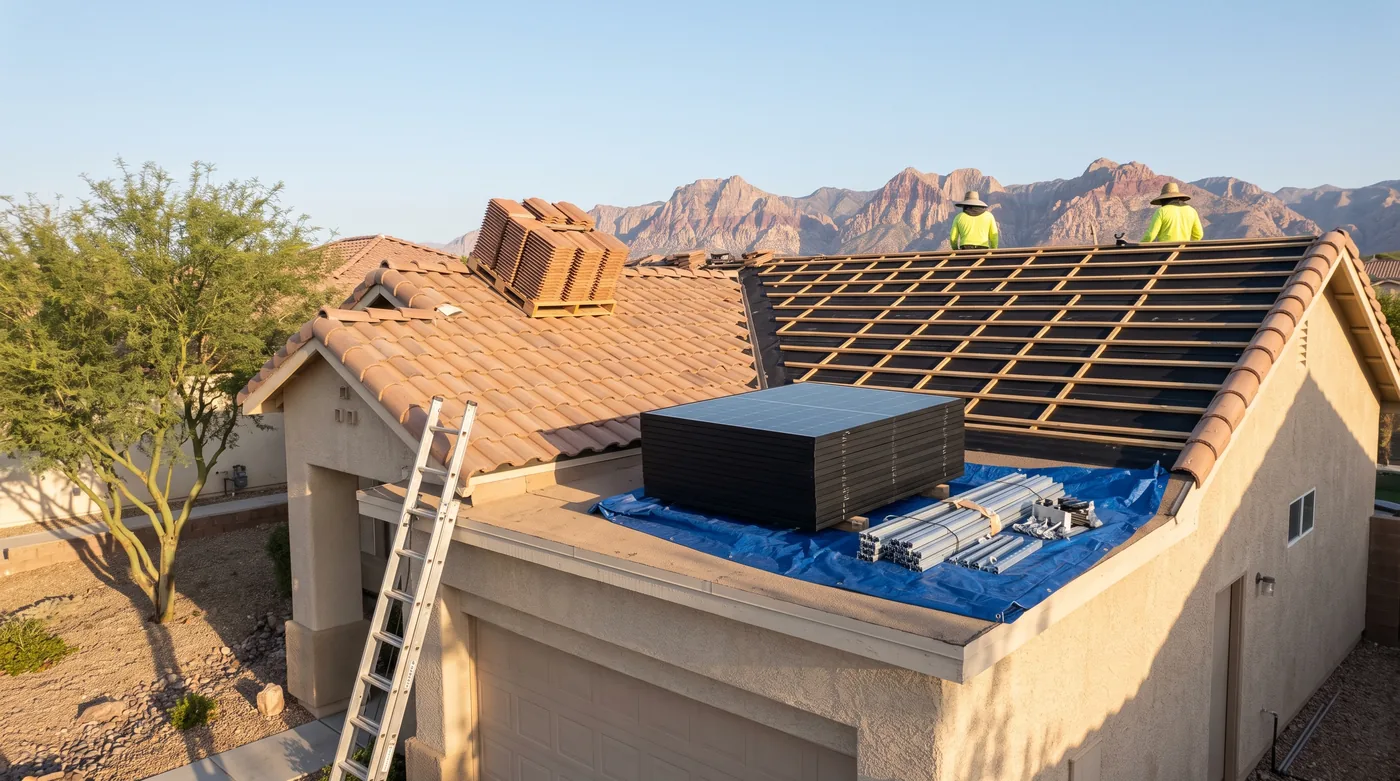
Yes, the panels have to come off, and they can go back on. Replacing a roof under a solar array is a routine job with a trade name, detach and reset: a licensed electrical contractor disconnects and removes the system, your roofer replaces the roof, and the system goes back on with new attachments and new flashing. The price is quoted in writing after someone has been on your roof. We do not print one here.
What decides whether it goes smoothly is the order you make the phone calls in, and three pieces of paper: who owns the system, which permits are being pulled, and who warrants the new holes in your new roof.
Call these people in this order
1. Whoever owns the system. If you paid cash or took a loan, that is you, and you can skip to step two. If the panels are leased, or you buy their power under a power purchase agreement, the equipment belongs to the company, and your agreement may say who is allowed to remove it and who pays. Find the clause before you book a roofer. If you are not sure which of the four you signed, prepaid PPA, lease, loan or cash sorts it out.
2. A licensed electrical contractor for the solar. Taking an array apart is electrical work on a live generating system. The City of Las Vegas homeowner permit guide is blunt about who may do it: along with homeowners working on their own homes, "only licensed plumbers and electricians are legally allowed to do plumbing or electrical work in Nevada." If a roofing crew offers to "just unbolt the panels", it is offering to do electrical work, so ask to see an electrical contractor licence first.
3. Your roofer. Then put the two of them in touch. They need the same dates, and they need to agree where the array goes back so that the new attachments land on rafters, not between them.
If the company that installed your system has closed, step one and step two can both land on the same question: who touches this system now? That is what our Solar Rescue page is for.
What happens on the day, in order
- Record production first. Screenshot a few weeks from your inverter app or monitoring. After the reset, the same weather should give you about the same numbers, and this is how you know.
- Shut down and disconnect. The electrical contractor follows the equipment's shutdown procedure, then disconnects the array from the inverter and the house.
- Remove and store. Panels come off first, then rails, then the roof attachments. Panels are stored flat and protected, on the ground or on a part of the roof the roofer is not working on.
- The roof is replaced. Tile, underlayment and flashing, the whole section under the array. The attachment locations get marked.
- New attachments and flashing. The electrical contractor installs new mounts into structure and flashes each one into the new roof. Old holes in the old underlayment are gone with it; the new ones are new work.
- Reinstall and reconnect. Rails, then panels, then wiring, then the inverter.
- Inspection and re-commissioning. The building department inspects what the permit covers, the system is switched back on, and production is compared with your baseline.
Plan for the panels to be off for the length of the roofing job. Ask both contractors for dates in writing, because every day the array is on a tarp is a day it is not producing.
Permits: expect at least two
The City of Las Vegas guide lists, among the work that needs a permit, applying new roofing "where all of the old roofing is removed or new sheathing is installed," installing or altering "any permanent wiring or electrical device," and installing a photovoltaic system. A detach and reset touches all three.
Clark County, Henderson, North Las Vegas and the City of Las Vegas each run their own building department, and the details differ by jurisdiction. Our permit guide shows which one you are in. The rule that matters is simple: ask each contractor, in writing, which permit they are pulling, and get a copy of each final inspection for your records.
One question worth asking if your system is older. Clark County's photovoltaic policy, BD-PP-206, was revised on April 30 2026, and it sets fire access pathways on the roof, including not fewer than two 36 inch wide pathways on separate roof planes. Ask your contractor whether the reinstalled layout has to meet the current version. An array laid out years ago may not, and it is far better to learn that before the panels come down than when the inspector is on the roof.
The roof warranty, and the holes in it
This is the part people forget to ask about until something leaks.
Nevada requires every solar purchase, lease or power purchase agreement to carry a written warranty on the installation and on the penetrations into the roof, expiring no earlier than 10 years after installation. That is NRS 598.9821. It covers the original installer's work. After a detach and reset, the penetrations in your new roof are somebody else's work.
So get three things in writing before anyone climbs a ladder:
- From the electrical contractor: a warranty on the new attachments, flashing and roof penetrations they make, with its length.
- From the roofer: what their roof warranty says about penetrations made by another contractor, and whether they want to flash or inspect them.
- From whoever owns the system, if it is not you: whether the removal and reinstall changes their warranty or maintenance obligations, and who they will accept doing it.
If you are replacing the roof after storm damage, the insurance side has its own questions, and they are on solar panels and your home insurance.
Why we will not print a price
Search this and you will find per panel prices from national sites and from other states. None of them is a quote for your roof, and we are not going to add another.
What actually moves the price: how many panels, whether the roof is concrete tile, clay tile or something else, the racking system and whether its parts can be reused, whether anything breaks on the way off, and what your building department requires for the reinstall. We look at the roof and the system, then give you a fixed price in writing before you decide.
While the panels are off
A detach and reset is the one time every connector, every rail and the underside of every panel is in reach. If your system has not been producing what it used to, or you have been meaning to deal with birds nesting under it, this is the cheapest moment to have it looked at. Is my solar system working lists the checks.
Questions people ask us
Do solar panels have to come off to replace a roof?
Yes, for the section of roof under the array. The roofer cannot remove and relay tile or underlayment beneath panels that are bolted through it. The array, its rails and its roof attachments come off, the roof is replaced, and the system goes back on with new attachments and new flashing where it meets the roof. The trade calls it a detach and reset.
Who should remove my solar panels, the roofer or an electrician?
The solar side is electrical work, so a licensed electrical contractor should disconnect, remove and reinstall it. The City of Las Vegas homeowner permit guide says only licensed plumbers and electricians, or homeowners working on their own homes, are legally allowed to do electrical work in Nevada. Your roofer handles the roof in between.
How much does it cost to remove and reinstall solar panels in Las Vegas?
We quote it in writing after a site visit, and we do not publish a number here. The price depends on the number of panels, the roof type, the racking, whether any part is damaged when it comes off, and what the permit requires. A per panel figure from another state or a national website is not a quote for your roof.
Do I need a permit to take solar panels off and put them back?
Plan on it. The City of Las Vegas homeowner guide requires a permit to alter permanent wiring, to install a photovoltaic system, and to apply new roofing where all the old roofing is removed. Clark County, Henderson and North Las Vegas each run their own building department. Your contractor should tell you in writing which permits they are pulling.
What happens to my roof penetration warranty after a detach and reset?
Ask before work starts, in writing. Nevada requires the original solar agreement to carry a written warranty on the roof penetrations of at least 10 years, under NRS 598.9821. New attachments made by a different contractor are that contractor's work, so get their warranty on the new penetrations and flashing, and ask your roofer what their roof warranty says about them.
My solar is leased. Can I just have it removed?
Call the company that owns the system before you book the roofer. On a lease or a power purchase agreement the equipment is theirs, and your agreement may say who is allowed to remove it and who pays. Read that clause first. If the company has closed, our Solar Rescue page covers what to do next.
Where these numbers come from
- City of Las Vegas Building Department, When Do I Need a Permit? A Homeowner's Guide (permit required to apply new roofing where all of the old roofing is removed, to install or alter permanent wiring, and to install a photovoltaic system; only licensed plumbers and electricians, and homeowners on their own homes, may do plumbing or electrical work in Nevada) checked 2026-09-28
- Clark County Building Department, Solar Photovoltaic Requirements, policy BD-PP-206, effective 09/15/2014, revised 04/30/2026 (fire access pathways, including not fewer than two 36-inch-wide pathways on separate roof planes) checked 2026-09-28
- NRS 598.9821, express warranties required in an agreement for a distributed generation system: installation and roof penetration warranty in writing, expiring not earlier than 10 years after installation; Nevada Revised Statutes chapter 598 as posted by the Nevada Legislature checked 2026-09-28
We recheck this page quarterly. Last checked 2026-09-28. If a number here has moved, tell us and we will fix it the same week.