
Permits, HOAs and inspections
Your HOA has 35 days to answer
Nevada gives an association with solar rules 35 days to approve or deny your panels. Miss it and the request is deemed approved. What the statutes actually say.
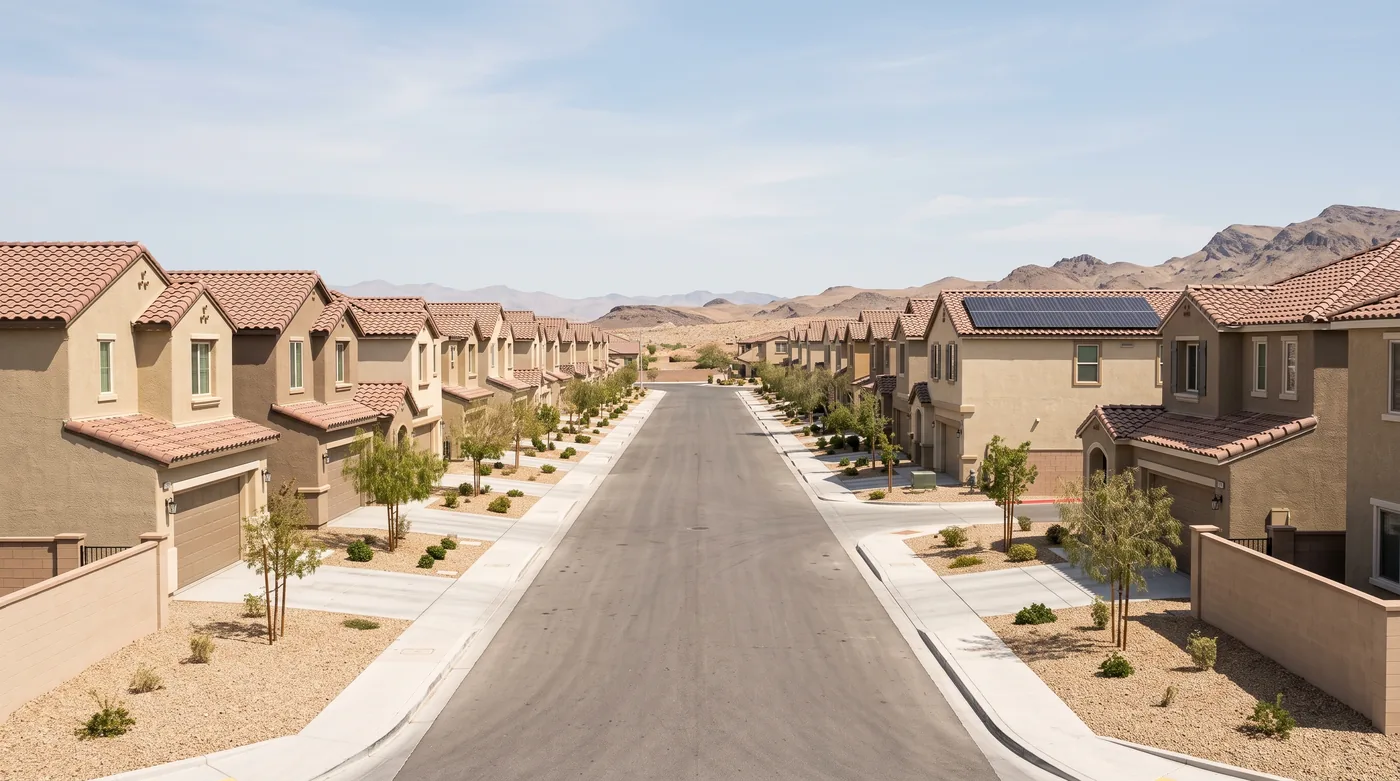
If your association has adopted solar rules, it has 35 days to approve or deny your request, and if it does not answer in time the request is deemed approved. If it has never adopted solar rules, it has 15 days and it has to approve. Both deadlines are new. They were written into NRS Chapter 116 in 2025 and took effect on October 1, 2025.
Most of what is written online about Nevada HOAs and solar predates that change, and a good deal of it points at the wrong statute. Here is what the current text says, section by section, with the words that matter quoted exactly. Read the sections yourself at the links at the bottom. This is a description of the law, not legal advice.
Where the 35 days actually lives
The deadline is in NRS 116.333, not NRS 116.334. The two sections were added together by Senate Bill 440 of the 2025 session, sections 13.3 and 13.7 of that act, and they do different jobs. NRS 116.333 is the clock. NRS 116.334 is the list of rules an association is allowed to have in the first place.
NRS 116.333(2) says:
An association that has adopted rules and regulations governing the installation of a distributed generation system pursuant to NRS 116.334 shall approve or deny the request within 35 days after the receipt of the request. If the association denies the request, the association shall provide the units owner a notice that details the reasons for the denial, which must be based on the rules and regulations adopted by the association pursuant to NRS 116.334. If the association fails to approve or deny the request within 35 days after the receipt of the request, the request shall be deemed to be approved.
Three things are in that one subsection. A deadline. A requirement that a denial explain itself in writing. And a requirement that the reasons come from the association's own adopted rules, so a board cannot invent a ground on the day it denies you.
Subsection 3 covers the second attempt. If your request was denied and you resubmit addressing the stated reasons, the association has 15 days, the denial notice requirement is the same, and if it misses that deadline the request is again deemed to be approved.
Subsection 4 is the one almost nobody mentions. If an association has not adopted solar rules under NRS 116.334, it:
shall approve the request within 15 days after the receipt of the request. The association shall not deny the request or impose any conditions upon the installation of the distributed generation system.
So the first question to ask your association is not "may I install solar". It is "have you adopted rules and regulations governing the installation of a distributed generation system under NRS 116.334, and may I have a copy". The answer decides which clock you are on and whether the board has any discretion at all.
One limit runs the other way, in subsection 1: the units owner shall not install the system unless the association has approved the request. You wait. The deadline is what makes waiting bearable.
"Distributed generation system" is defined in NRS 598.9804 as a system or facility for the residential generation of electricity that uses solar energy. Rooftop panels on a house are squarely inside it.
What the association is allowed to require
NRS 116.334 lets an association whose governing documents authorize restrictions on architectural improvements adopt solar rules. If it does, subsection 2 says those rules must:
- Not conflict with the National Electric Code, any local ordinance or any state law or regulation, and the statute adds that the rules "do not apply to the extent of any such conflict".
- Require the solar installation company to be properly licensed.
- Not require the owner to comply with a placement or appearance rule where the cost of complying exceeds 3 percent of the cash cost of the installation.
Subsection 3 is the permitted list. Rules may require you to:
- Install the panels so they do not face a street, so long as complying does not cut production by more than 10 percent, "as determined using the PVWatts Calculator maintained by the National Renewable Energy Laboratory of the United States Department of Energy".
- Paint all conduits to match the exterior of the unit.
- Store all batteries in a garage.
- Place inverters outside of any street and reasonably out of view of other owners.
- Sign an agreement with the association where the system goes on a roof the association maintains. The statute lets that agreement be recorded and lists what it may contain: your responsibility for damage, removal at your expense if the association needs to work on the roof, the association's right to remove the system if you do not, installation in line with the approved request, an insurance policy naming the association as an additional insured, indemnity, a right of inspection, and disclosure to a buyer.
Subsection 4 puts a fence around one specific fight. An association may not unreasonably restrict, prohibit or withhold approval for a physical barrier around the system to keep animals out or to hide components for appearance, and it may not require a particular type of barrier. It may require a barrier colour only if that colour is commercially available as a stock item, and if it is not, the colour has to be black or something complementary to the panels or racking.
The two numbers worth writing down
10 percent. A "not facing a street" rule only bites if the alternative orientation costs you less than 10 percent of production, and the statute names the measuring tool: the PVWatts Calculator from the National Renewable Energy Laboratory. That turns a design argument into a calculation both sides can run. On a great many Las Vegas roofs the gap between a south facing plane and a west facing plane clears that bar comfortably, which is exactly the situation the subsection was written for. We model both orientations for a Henderson address on the Henderson page.
3 percent. If an appearance or placement requirement costs more than 3 percent of the cash cost of the installation, you do not have to comply with it. NRS 116.334(2)(c) also tells you how to prove it. You deliver to the association a written estimate that:
- Is prepared by a solar installation company properly licensed under NRS Chapter 624 and not affiliated with either you or the association.
- Is dated not more than 60 days before you deliver it.
- Itemizes all costs of complying, including labour, materials, professional fees, permit fees, inspection fees, financing charges and change orders.
- Shows those costs exceed 3 percent of the contract price for the installation.
That is a checklist, and an estimate missing any of the four items is easy for a board to set aside. If you need one of these we will write it to those four points, itemized, whether or not we are the company doing your install.
If you are not in an HOA, or the restriction is in your deed
Two older statutes cover that ground and neither has changed recently.
NRS 278.0208 applies to local governments and to recorded restrictions. Subsection 1 says a governing body shall not adopt an ordinance, regulation or plan, or take any other action, that "prohibits or unreasonably restricts or has the effect of prohibiting or unreasonably restricting" an owner from using a system for obtaining solar energy. Subsection 2 says a covenant, restriction or condition in a deed, contract or other legal instrument that does the same thing "is void and unenforceable". Subsection 3 deems two things unreasonable: a restriction that decreases the system's efficiency or performance by more than 10 percent of what was originally specified, as determined by the Director of the Office of Energy, where no comparable alternative is allowed, and any prohibition of a system that uses components painted with black solar glazing.
NRS 111.239 carries the same rule for covenants in deeds and contracts, in nearly identical words, including the same 10 percent test and the same protection for black solar glazing.
Note the difference between the two tests. NRS 278.0208 measures 10 percent of the efficiency or performance originally specified, determined by the Director of the Office of Energy. NRS 116.334 measures a 10 percent decrease in production, determined with PVWatts. They are not the same instrument, and which one applies depends on whether you are arguing with an association's adopted rules or with a covenant.
How to keep the clock honest
The deadline only helps if the date of receipt is not in dispute. What we do on a job in an association:
- Ask for the association's adopted solar rules in writing before designing anything. If there are none, subsection 4 is your answer.
- Build the submission to the rules that exist, so a denial has nothing adopted to point at.
- Deliver it in a way that produces a receipt, and note the delivery date on the file.
- Diary day 35, and day 15 for a resubmission.
- If a denial arrives, read it against the adopted rules. The notice has to detail reasons, and the reasons have to be based on those rules.
We are a licensed Nevada electrical contractor. We are not lawyers and nothing here is legal advice. If your association denies your request, ignores it, or tries to enforce something that is not in its adopted rules, read NRS 116.333, NRS 116.334 and NRS 278.0208 yourself at the links below, and speak to a Nevada attorney or to the Ombudsman for Common-Interest Communities at the Nevada Real Estate Division.
Questions people ask us
Can my HOA say no to solar panels in Nevada?
Only within limits, and only if it has adopted solar rules under NRS 116.334. A denial has to come with a notice detailing the reasons, and those reasons must be based on the association's adopted rules. An association that has not adopted rules must approve the request and may not impose conditions on it.
What happens if my HOA just does not respond?
NRS 116.333 answers that. If an association with adopted solar rules fails to approve or deny within 35 days after receiving the request, the statute says the request shall be deemed to be approved. On a resubmission that fixes the stated reasons for a denial, the clock is 15 days with the same result.
Can the HOA make me put the panels on the back of the house?
It can require panels not to face a street, but NRS 116.334 caps that. The requirement does not apply if complying would cut the system's production by more than 10 percent, measured with the National Renewable Energy Laboratory PVWatts Calculator. That makes it an arithmetic question with a named tool, not an argument about taste.
Can my HOA charge me or make me pay for changes?
NRS 116.334 says a units owner does not have to comply with an aesthetic or placement rule if the cost of complying exceeds 3 percent of the cash cost of the installation. You show that with a written, itemized estimate from an independent licensed solar installer, dated no more than 60 days before you deliver it.
Do these rules apply if I am not in an HOA?
A different statute covers you. NRS 278.0208 says a local government may not prohibit or unreasonably restrict solar, and that a covenant or deed restriction which does so is void and unenforceable. NRS 111.239 says the same thing about covenants in deeds and contracts. Neither one has a 35 day clock in it.
Can I start the install while I wait for the HOA?
No. NRS 116.333 states that the units owner shall not install the distributed generation system unless the association has approved the request. Waiting is the whole point of having a deadline. We build the submission, note the delivery date and diary day 35 so the clock is documented from the start.
Is this page legal advice?
No. We are a licensed electrical contractor, not a law firm. This page describes what the statutes say on the date at the top, with links so you can read them yourself. If your association denies your request or ignores it, talk to a Nevada attorney or the Real Estate Division's Ombudsman for Common-Interest Communities.
Where these numbers come from
- NRS 116.333, request by units owner to install distributed generation system, approval or denial, resubmission (added to NRS by 2025) checked 2026-09-19
- NRS 116.334, adoption of rules and regulations by association related to installation of distributed generation system, conditions and limitations (added to NRS by 2025) checked 2026-09-19
- Senate Bill 440, 83rd session of the Nevada Legislature (2025), enrolled text, sections 13.3 and 13.7, effective October 1, 2025 checked 2026-09-19
- NRS 278.0208, prohibition against prohibiting or unreasonably restricting use of a system for obtaining solar energy checked 2026-09-19
- NRS 111.239, prohibition or restriction on use of system for obtaining solar energy on property checked 2026-09-19
- NRS 598.9804, definition of distributed generation system checked 2026-09-19
We recheck this page quarterly. Last checked 2026-09-19. If a number here has moved, tell us and we will fix it the same week.